


 57 Huynh Thuc Khang - Dong Da - Hanoi

 02435533388
 vnptit@vnpt.vn


 Contact
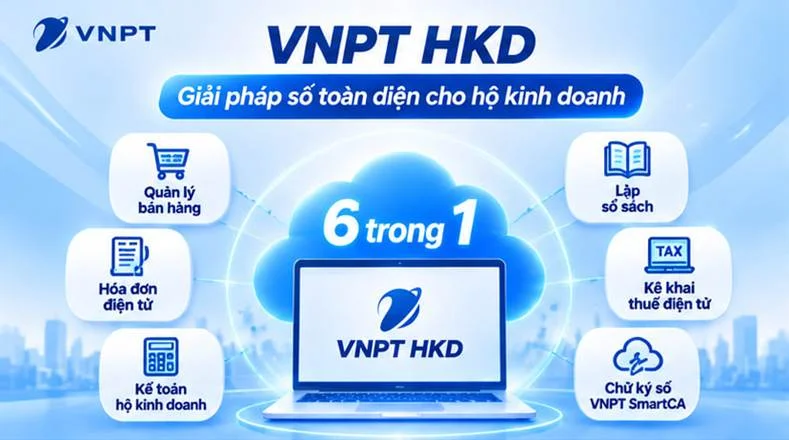
At a grocery store, after-hours work can drag on from checking sold goods and reconciling daily revenue to gathering purchase documents. When orders, invoices, revenues, and expenditures are scattered across various places, business owners must spend extra time reviewing them before each tax declaration period. VNPT HKD is built to connect these stages, starting right from the counter transaction.
From counter transactions to e-invoices

VNPT HKD integrates six business operations onto a single platform: sales management, household business accounting, statutory bookkeeping, e-invoicing, electronic tax filing, and digital signatures VNPT SmartCA.
At the point of sale, business owners can create orders, track revenue, and manage inbound, outbound, and inventory stocks. The information recorded on orders can be utilized when issuing invoices, reducing the need to re-enter product names, quantities, and selling prices. The solution also supports electronic invoices generated from cash registers for businesses that adopt this method. VNPT SmartCA enables remote signing on mobile phones or computers for operations requiring digital signatures.
Sharing data also supports reconciliation. For instance, when reviewing daily revenue, a restaurant owner can inspect sales orders, invoices, and collected amounts. Material purchases or incurred expenses are recorded through accounting operations to supplement data for tracking income and expenses.
Bookkeeping from daily business data

From 1/1/2026, Circular 152/2025/TT-BTC of the Ministry of Finance guides bookkeeping for household businesses and individual businesses. Accounting book forms apply depending on each case. To have complete data when preparing books, household owners need to record incurred transactions and collect relevant documents during business operations.
On VNPT HKD, accounting operations support recording purchases, sales, receipts, payments, and liabilities. The recorded data is used to generate appropriate book forms. The solution supports books for goods and services sales revenue, detailed books for revenue and expenses, detailed books for materials, tools, products, and goods, and detailed books for cash.
For a retail store, purchase invoices and warehouse receipt vouchers can be used to cross-check against the quantity of imported goods. On the sales side, business household owners can verify recorded revenue based on sales orders and invoices. If discrepancies are found, having transaction-level data helps owners review when they occurred and add missing information.
Books also serve daily decisions. When tracking revenue, expenses, and outstanding amounts owed to suppliers, business owners have a better basis to plan inventory purchases, control costs, and balance cash flows. Regular recording throughout the period helps reduce the workload of summarizing data when preparing tax filings.
Proactively review figures before the tax declaration period
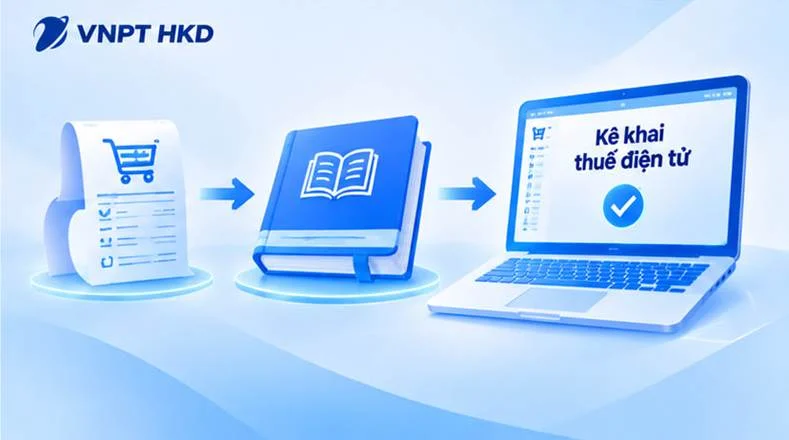
When the declaration period arrives, VNPT HKD supports consolidating business data, preparing tax returns, and exporting tax files. Business owners can check revenue and related indicators, cross-checking them against invoices, vouchers, and accounting books before submission. Non-counter expenses such as raw material purchases, store rent, or shipping costs can be recorded separately to assist with the review.
This organizational method is suitable for retail stores, eateries, coffee shops, and service-based household businesses, where owners often sell goods directly while concurrently overseeing income and expenditures. The platform operates on cloud computing infrastructure, enabling household businesses to use the software without having to invest in their own servers. According to information from VNPT, the VNPT HKD solution has been used by more than 60.000 household businesses.
The value of the “6 in 1” model is demonstrated through how data is utilized seamlessly. Counter orders serve sales management and invoicing. Recorded transactions of purchases, sales, revenues, and expenditures become the basis for bookkeeping. When tax declaration is required, business owners can review these figures on the same platform. For household businesses with numerous daily transactions, this is a way to reduce repetitive data entry and maintain accounting records more consistently.
Information about the solution and consultation registration can be found at hkd.vnpt.vn.